Here’s how to become a private investigator in Indiana: you need at least two years (4,000 hours) of experience in investigations or security (or a four-year criminal justice degree), a clean background, and $100,000 in professional liability insurance. Indiana only issues firm licenses, not individual PI licenses, so even solo operators must apply through the Indiana Professional Licensing Agency as a business entity.

Most states have their quirks when it comes to PI licensing. Indiana’s is worth understanding before you start the clock on your experience hours: the state doesn’t issue licenses to individual private investigators. It issues firm licenses. Whether you’re planning to run a ten-person agency or hang a shingle as a sole proprietor, you’ll apply the same way, as a business entity through the Indiana Professional Licensing Agency. If you want to work as an investigator for a licensed firm without owning the business, you typically don’t need an individual license, as long as you operate under that firm’s supervision and authority.


 | Meet the Basic Qualifications in Indiana |
 | Work for a Licensed PI Firm to Build Your Experience |
 | Apply for a PI Firm License Through the Indiana PLA |
 | Build Your Career as an Indiana PI |
Andy Starks and Tom Hildebrand, founders of Omni Investigative Services in Indianapolis, are the kind of PIs that set the bar for the profession. Both came up through the Indianapolis Metropolitan Police Department as detectives, with decades of investigative work that translated cleanly into a private practice built on litigation support, financial fraud investigations, and pre-employment background checks. Personal injury attorneys and family law practices keep them busy. That kind of reputation takes time to build, but the foundation starts with the same licensing process every Indiana PI firm goes through.
Step 1. Meeting the Basic Qualifications in Indiana
To qualify for a PI firm license in Indiana, you’ll need to satisfy all of the following conditions before submitting your application to the Indiana Private Investigator and Security Guard Licensing Board (governed by 874 IAC 1-2):
- Be at least 21 years of age
- Have at least two years (4,000 hours) of verifiable work experience in investigations or security (or the approved education equivalent described below)
- Hold professional liability insurance of at least $100,000, meeting state requirements (which may include listing the State of Indiana as an additional insured — confirm with the PLA)
- Have no felony convictions or convictions for crimes with a direct bearing on your ability to act as a PI
- Not currently be on probation or parole
One thing to keep in mind on the experience requirement: it must be verifiable through reliable documentation, typically employer records. Some forms of independent or freelance work may be harder to document and may not be accepted. If you’ve been doing investigative work outside of a formal employment arrangement, confirm with the Indiana PLA before counting those hours toward your total.
Education as a Substitute for Experience
Indiana allows a four-year degree in criminal justice to substitute for the two-year experience requirement. That path makes sense for people coming out of a criminal justice program who want to move directly into running their own firm without spending years working under an existing license first. In practice, though, most applicants build their hours through employment: law enforcement, military service, security work, or supervised investigative work under a licensed Indiana PI firm.
Beyond criminal justice, degrees and certificates in the following fields can strengthen your application and your day-to-day effectiveness in the field:
- Law
- Business
- Psychology
- Law Enforcement
- Public Administration
Step 2. Working for a PI Firm to Build Your Experience
Working under a licensed Indiana PI firm is the most common way to accumulate the required 4,000 hours. The arrangement works to your advantage in more ways than just the clock: you’re building actual investigative skills (surveillance, skip tracing, interview technique, report writing) under someone who’s already navigated the licensing process and built a client base.
When you come on board, the licensed PI is responsible for your professional conduct and is required to collect the following from you at hire:
- A current photograph
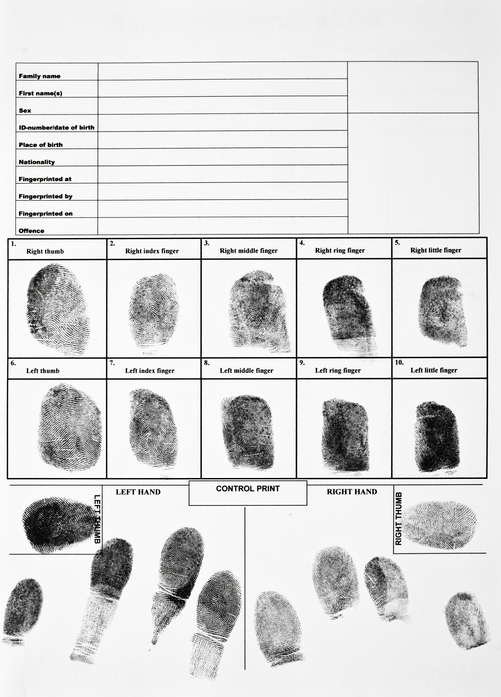
- A full set of fingerprints
Depending on the firm, you may also be asked to provide a criminal background check, employment history, character references, and drug testing results. None of that is required by the state. It’s at the firm’s discretion, but most reputable operations will want it.
Step 3. Applying for a PI Firm License Through the Indiana PLA
Because Indiana only issues firm licenses (not individual PI licenses), the application process is structured around your business entity, even if you’re planning to operate solo. You’ll submit a Firm Application to the Indiana Professional Licensing Agency’s Private Investigator and Security Guard Licensing Board in Indianapolis. Along with the completed application, you’ll need to include:
- Verification of two years of acceptable work experience
- A criminal background history and fingerprint check covering recent residence history (commonly the past seven years, per application requirements). Fingerprinting is conducted through the Indiana State Police
- Proof of professional liability insurance for at least $100,000, meeting state requirements (confirm current requirements with the PLA)
- A $300 application fee
Once licensed, you’ll need to renew every four years. The renewal fee is $150, and the process includes a limited state background check covering the prior four years. Keep your insurance current and confirm that your coverage continues to meet state requirements throughout the license period.
Step 4. Building Your Career as an Indiana PI
With a firm license in hand, you’re in a relatively uncrowded field. According to BLS data, approximately 560 private investigators were employed in Indiana as of May 2024. That’s not a long bench in a state of 6.8 million people, and it’s an opening, not a warning. The work is there. Personal injury litigation, insurance fraud, family law, corporate due diligence, missing persons — Indiana PIs work all of it.
Two professional associations are worth knowing from the start. The Indiana Society of Professional Investigators (INSPI) and the Indiana Association of Professional Investigators (IAPI) both offer networking, continuing education opportunities, and a community of working investigators who’ve been where you’re going. Membership won’t get you licensed, but it can get you connected to the people and resources that make the difference between a practice that struggles and one that grows.
Stay current on the statutes that govern your practice. Indiana PI firms operate under state law and administrative rules that apply regardless of where in the state you’re working, whether you’re running surveillance outside Indianapolis, tracking down a witness in Fort Wayne, or working a fraud case out of Evansville.
Private Investigator Salary in Indiana
The figures below are estimates based on BLS data. Actual salaries vary by role, experience, and specialty. According to Bureau of Labor Statistics data from May 2024, private investigators in Indiana earned a median annual salary of $45,400, with a mean annual wage of $52,140. Those in the top 10% of earners statewide brought in $80,910 or more. The BLS projects 6.4% employment growth for Indiana private investigators between 2022 and 2032, with an average of 50 job openings per year, a steady if modest outlook that reflects both new positions and turnover in existing roles.
Private Investigator Salaries in Indianapolis, Fort Wayne, and Evansville
Salary figures vary across Indiana’s major metro areas. The table below reflects BLS data from May 2024:
| Metro Area | Employed | Median Annual | Mean Annual | 90th Percentile |
|---|---|---|---|---|
| Indianapolis-Carmel-Greenwood | 200 | $47,430 | $56,240 | $83,400 |
| Fort Wayne | 40 | $39,620 | $49,350 | $80,960 |
| Evansville | 40 | $45,400 | $49,970 | $75,920 |
Indianapolis commands the highest ceiling, with top earners breaking $83,000. The state’s median salary of $45,400 sits slightly below the national median of $52,370, though experienced investigators working insurance defense, corporate litigation, or financial fraud cases typically earn well above the statewide midpoint.
Frequently Asked Questions
Do I need a license to work as a private investigator in Indiana?
It depends on what you want to do. If you’re working as an employee or contractor for a licensed PI firm, you typically don’t need an individual license, as long as you operate under that firm’s supervision and authority. If you want to operate independently or run your own investigation business (even as a sole proprietor), you’ll need a PI firm license from the Indiana Professional Licensing Agency. Indiana doesn’t issue individual PI licenses. The firm license is the only path for independent operators.
What experience counts toward Indiana’s 4,000-hour requirement?
Indiana accepts experience in investigations or security-related fields: law enforcement, military intelligence, licensed security work, or supervised investigative work under a licensed PI firm. The hours must be verifiable through reliable documentation, typically employer records. Some forms of independent or freelance work may be harder to document and may not be accepted, so confirm with the PLA if your background includes non-traditional experience.
Can a criminal justice degree substitute for the experience requirement?
Yes. A four-year bachelor’s degree in criminal justice is an approved substitute for the two-year (4,000-hour) experience requirement under Indiana law. Other related degrees may strengthen your application and your career prospects, but the criminal justice bachelor’s is the only education path the state officially recognizes as a direct experience equivalent.
How do I renew my Indiana PI firm license?
Indiana PI firm licenses renew every four years. The renewal fee is $150, and you’ll go through a limited state criminal background check covering the four years since your last renewal. Keep your professional liability insurance active throughout. Your coverage must remain at or above $100,000 with Indiana listed as an additional insured, or your license is at risk.
Are there continuing education requirements for Indiana PIs?
The state does not currently mandate continuing education for license renewal. That said, both INSPI and IAPI offer training opportunities, and the Indiana Association of Professional Investigators’ Code of Ethics encourages members to take advantage of them. Staying current on surveillance law, privacy regulations, and investigative technology is a practical necessity regardless of what the renewal form requires.
Key Takeaways
- Indiana issues firm licenses only. There is no individual PI license in this state. Solo operators and agency owners alike apply as a business entity through the Indiana Professional Licensing Agency.
- Working for a licensed firm typically requires no license of your own, as long as you operate under that firm’s supervision and authority. You only need a firm license if you want to operate independently.
- The standard path is 4,000 hours of verifiable experience in investigations or security. A four-year criminal justice degree is the only approved substitute. Experience must be documentable through employer records. Freelance or independent work may not be accepted.
- The application fee is $300 and requires fingerprinting, a background check covering recent residence history, and proof of $100,000 in professional liability insurance meeting state requirements (confirm specifics with the PLA).
- Firm licenses renew every four years for $150, with a limited state background check covering the renewal period.
- Indiana PIs earned a median annual salary of $45,400 as of May 2024, with top earners in the Indianapolis metro reaching $83,400, according to the BLS.
Ready to start your path to a PI career in Indiana? Explore criminal justice programs that can help you meet the experience requirement or build the investigative skills that make the difference once you’re licensed.
May 2024 US Bureau of Labor Statistics salary and job market figures for Private Detectives and Investigators reflect state and national data, not school-specific information. Conditions in your area may vary. Data accessed May 2026.